
Sam Spade
The Psychological Shrapnel
For me, storytelling violence entails vivid, visceral acts like punching, kicking, breaking bones, and visible bloodshed. If a jaw isn't broken or a tooth isn't knocked out, I often feel the scene lacks impact. In Dashiell Hammett’s The Maltese Falcon, the fights are relatively subdued by modern standards. This could be due to generational shifts: what was considered gritty in 1932 now seems tame compared to the chaos in Sons of Anarchy.
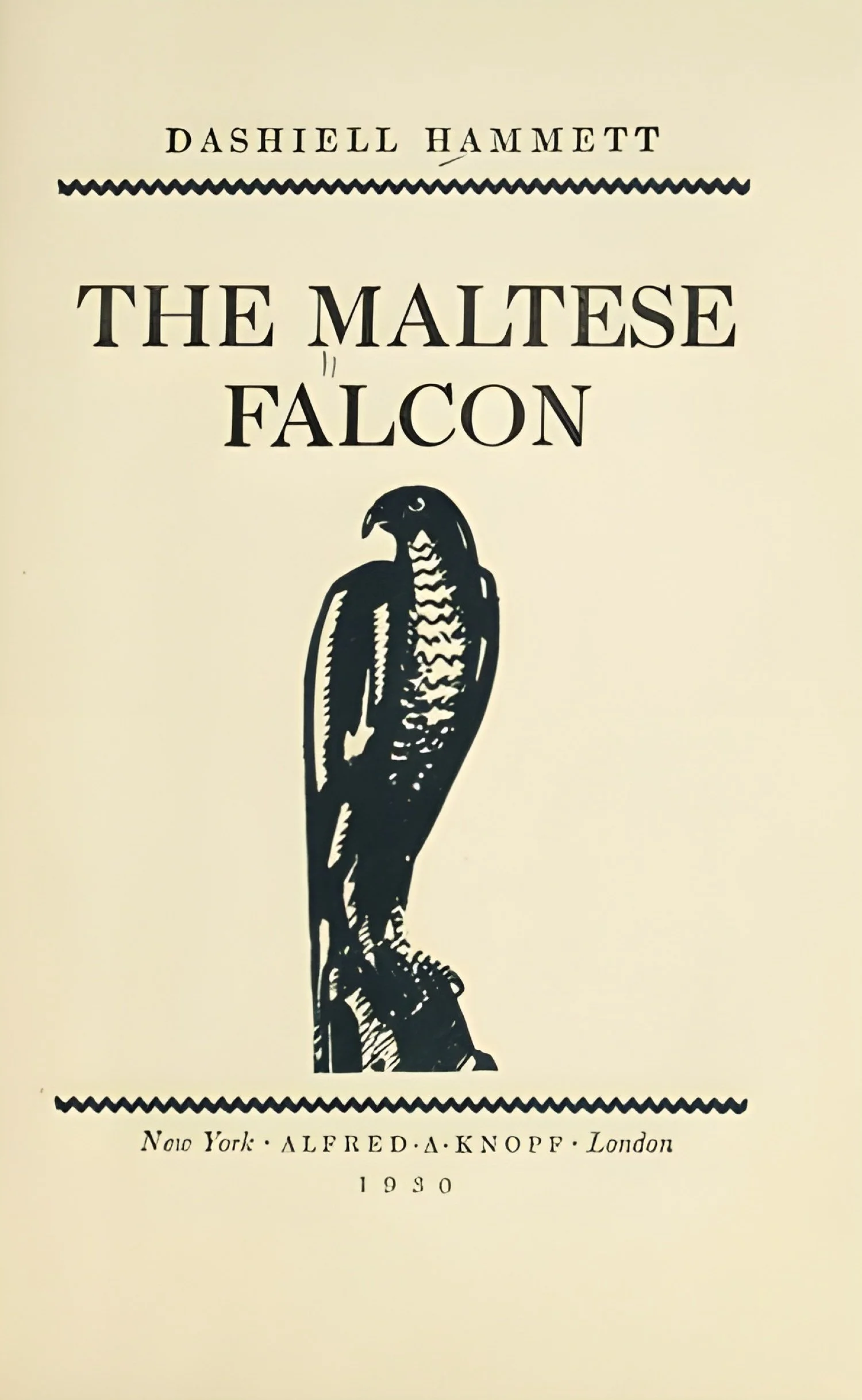
When he shakes a fist or psychologically intimidates opponents, does Spade reveal his true character?
To truly understand Sam Spade, I must set aside my biases and view him through a 1932 lens. This approach uncovers that Spade is an intensely aggressive character. His main asset isn't physical strength but his sharp intellect.
The climax of The Maltese Falcon unfolds in a claustrophobic room where Spade secretly observes Gutman, Cairo, Wilmer, and O'Shaughnessy. The scene features little physical action—primarily a struggle with Wilmer and one punch from Spade—yet the heightened suspense is palpable, almost leaping from the page.
This prompted me to reconsider my initial assumptions. Violence in a mystery doesn't need to be only physical to be effective. It can also be psychological, as long as the writer follows Hammett’s method: developing a slow-burning sense of threat throughout the story.
"A violent scene functions as the ultimate reveal, exposing characters' true natures by stripping away their masks."
This made me wonder: why is violence even necessary in a mystery? I think a violent scene functions as the ultimate reveal, exposing characters' true natures by stripping away their masks. It reveals their raw strengths and deepest weaknesses and helps establish the pecking order.
In the final apartment scene of The Maltese Falcon, the violence or the threat of it reveals Gutman's gang’s selfish drive for survival. Gutman and Cairo quickly scheme to burn Wilmer in order to protect themselves and keep chasing the Falcon. This is a turning point where the power dynamics shift, and Spade finally secures the upper hand for the first time.
Throughout the novel, Spade’s motives are unclear. Sometimes, it appears his loyalty has been bought with Gutman’s finder’s fee. He is charming yet morally ambiguous.
Only during these moments of nonviolent violence—like when he shakes a fist or psychologically intimidates opponents—does Spade reveal his true character. Without this edge, he would just be another scavenger in the room, not a hero. Even subtle violence ultimately secures his victory and affirms his status as the hero among villains.
📸Author Feed
✍️Writing Room
🫂Connections