
The Pandit Doctrine
Beyond the Fictional Sleuth
Oct 23, 2016
Rajani Pandit famously maintains a distance from the world of fictional detectives. “I’m a detective myself. I don’t need to read about them,” she notes, dismissing the tropes of the genre in favor of the grit of the field. (Nair) Her philosophy emphasizes a stark contrast between the solitary “hero and sidekick” model of literature and the reality of professional investigation, which she argues necessitates a robust, reliable network of informants and specialists to ensure success.
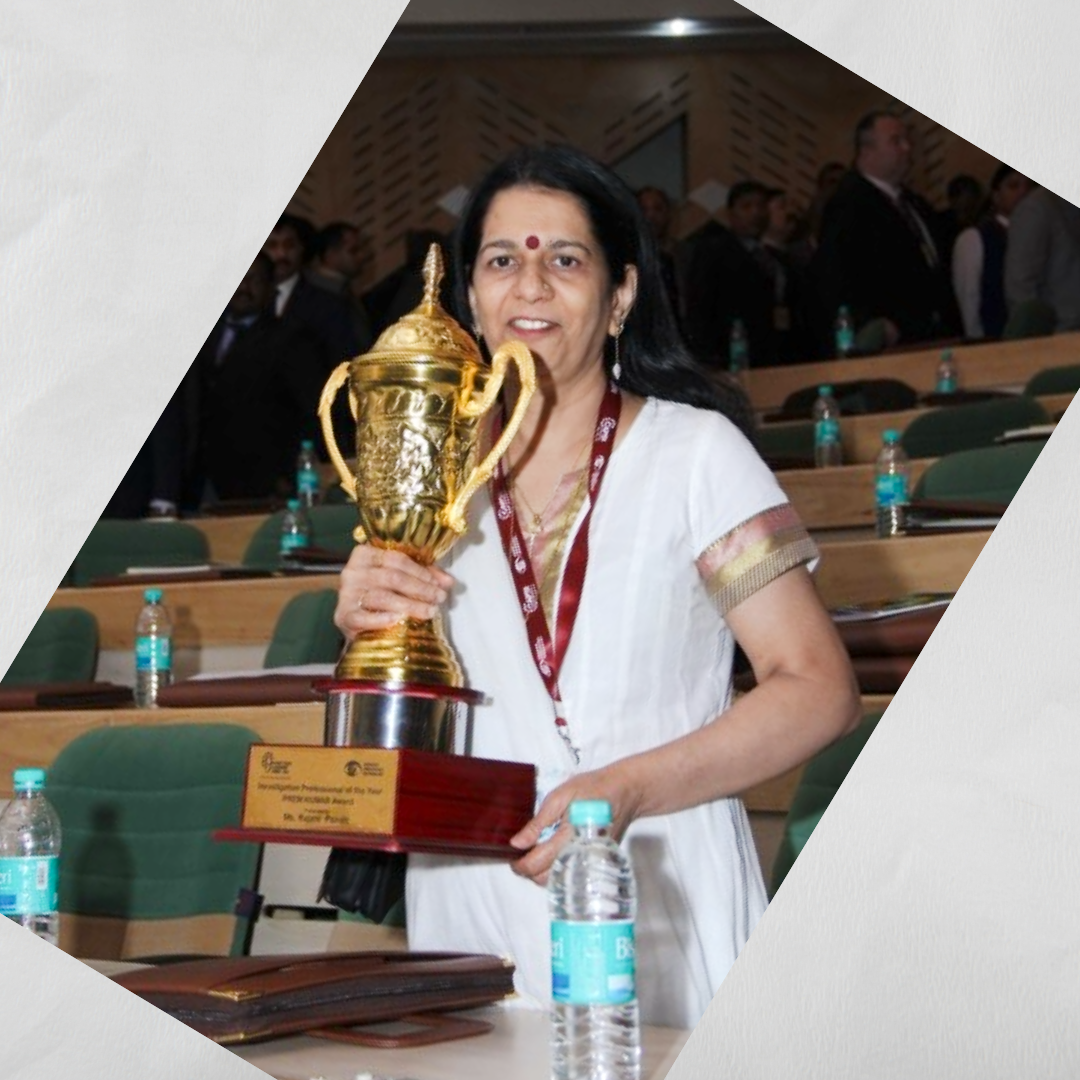
“The cops read my work and take cues from them.”
For the aspiring investigator, Pandit’s advice centers on cognitive agility and moral integrity. She insists that a detective requires a “sharp mind and a keen eye,” grounded in deep sincerity, because the profession involves handling others’ most sensitive secrets. When it comes to the art of the disguise—a hallmark of her career—she operates by three cardinal rules: first, ensure your performance is so seamless that the “acting” is invisible; second, maintain the ability to think instantly on your feet; and third, never allow your professional guard to drop, regardless of the setting. (Vasundara)
This perspective is bolstered by Raaj Talele, a former colleague and owner of Spyera Security and Detective, who offers a more cynical, albeit pragmatic, addition to the trade: “Good detectives are good liars. And you can’t do that if you refuse to lie.” (Nair)
Pandit also offers gender-specific counsel, warning female operatives to exercise extreme caution in isolated areas or questionable establishments after dark. She speaks from experience, noting that a female detective operating alone can easily be mischaracterized by the public—and even by criminals. She recalls an instance in which a local madam propositioned her, mistaking her surveillance for a different trade entirely.
To mitigate these risks, unlike many of her private-sector counterparts, Pandit actively seeks cooperation from the Mumbai police. This collaborative relationship is rooted partly in her heritage—her father was a respected CID officer—and partly in her earned reputation. “The cops read my work and take cues from them,” she says with a confident smile. (Nair)
Ultimately, Pandit’s worldview is one of vigilant skepticism. “In today’s world, it is wrong to trust anybody,” she warns. (Vasundara) Yet, this cynicism is balanced by her commitment to empowering her clients. She recalls a woman who, unable to afford Pandit’s fees, suspected her husband of infidelity. Rather than turning her away, Pandit mentored the woman, advising her to don a burka and conduct her own surveillance. Following the instructions, the woman trailed her husband to a beach, confirmed his betrayal, and confronted him directly. Reflecting on the encounter, the client later told Pandit, “You are the one who gave me the strength to do it.” It is this brand of courage that Pandit hopes to instill in every woman she encounters.